Between Rivers: Here is how one ancient vase can open the long history of the land between two rivers.
One vase, five thousand years
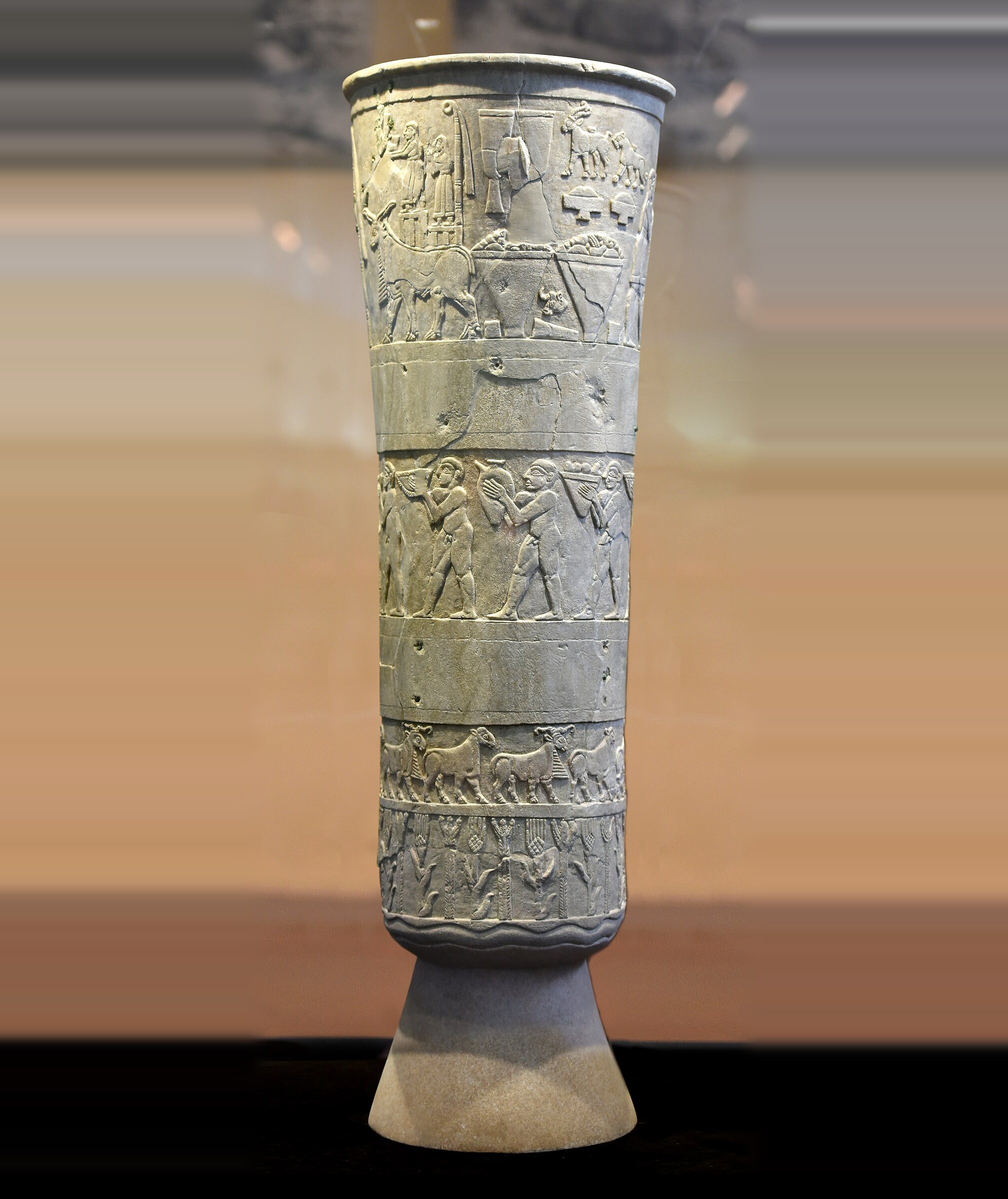
Warka Vase, Uruk, c. 3000 BCE. Iraq Museum, Baghdad, IM 19606. Photo: Osama Shukir Muhammed Amin, CC BY-SA 4.0 (Wikimedia Commons); backdrop extended.
c. 3000 BCE: Around 3000 BCE, in Uruk, probably the largest city of its time, a sculptor carved the Warka Vase from alabaster.
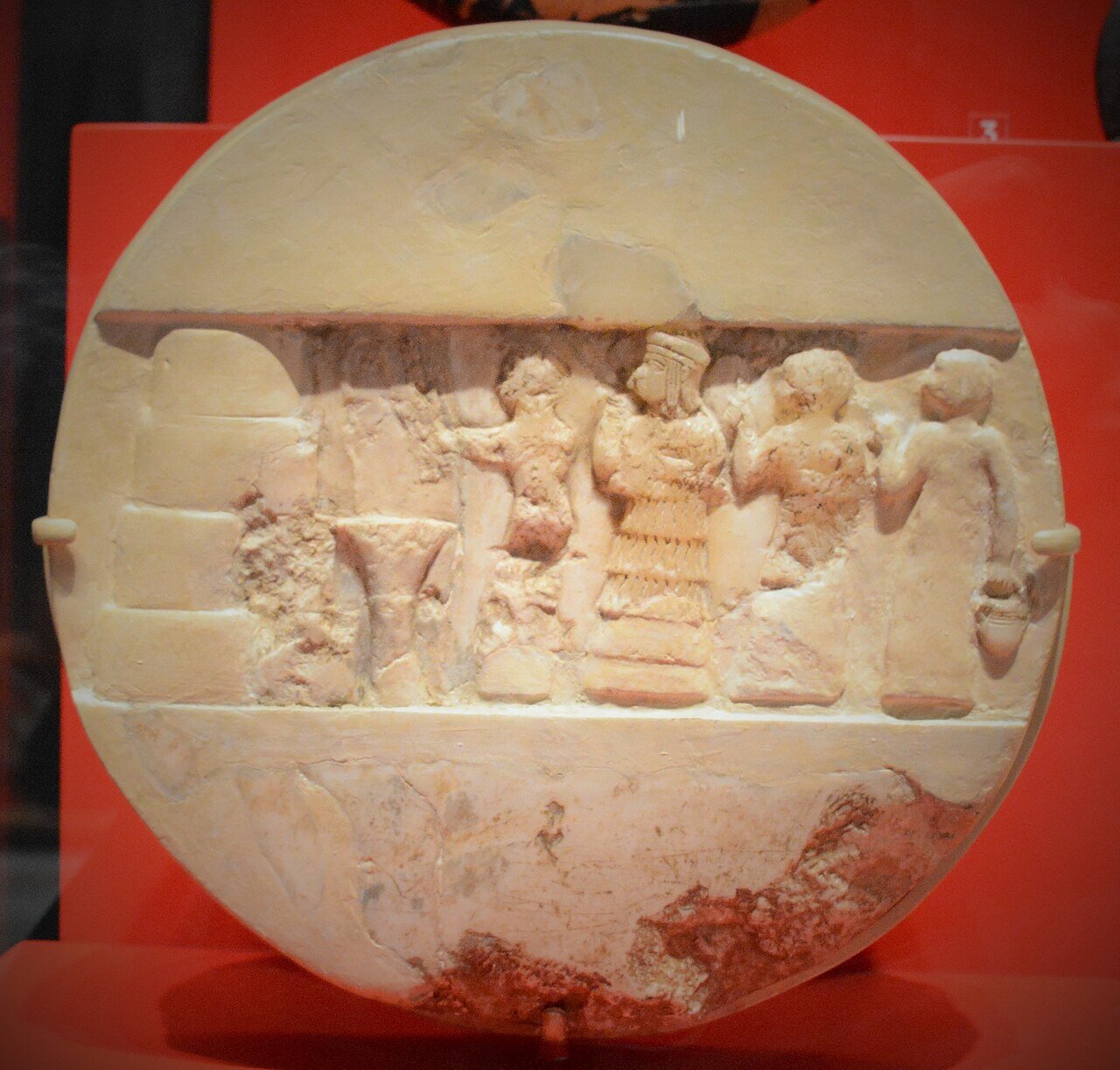
c. 3000 BCE: Its bands rise from water and plants to rams, men carrying offerings, and a woman receiving gifts – the goddess Inanna or her priestess.
1850s: In the 1850s, the British geologist William Kennett Loftus dug at Warka, the mound that hides Uruk, and sent his finds to London.
1850s: He never found the vase. It lay in Eanna, the temple precinct of Inanna, in a great deposit of offerings.
1933–34: In the winter of 1933–34, German excavators found it there, broken, with a repair made in antiquity at its rim.
Apr 2003: In April 2003, as Baghdad fell, looters broke into the Iraq Museum, where the vase was one of the treasures.
Apr 2003: They hacked it away from its base, which was left standing on its pedestal.
Jun 2003: On 12 June 2003, three men brought it back in the boot of a car, under an amnesty for returned objects.
Jun 2003: It was in more than a dozen pieces. About 15,000 objects had been taken, and the search for them
Jun 2003: became part of a wider effort to trace Iraq’s looted heritage through markets, borders and police raids,
Jun 2003: an effort that would go on for many years.
2015: In February 2015, the Iraq Museum reopened, with the restored vase on display.
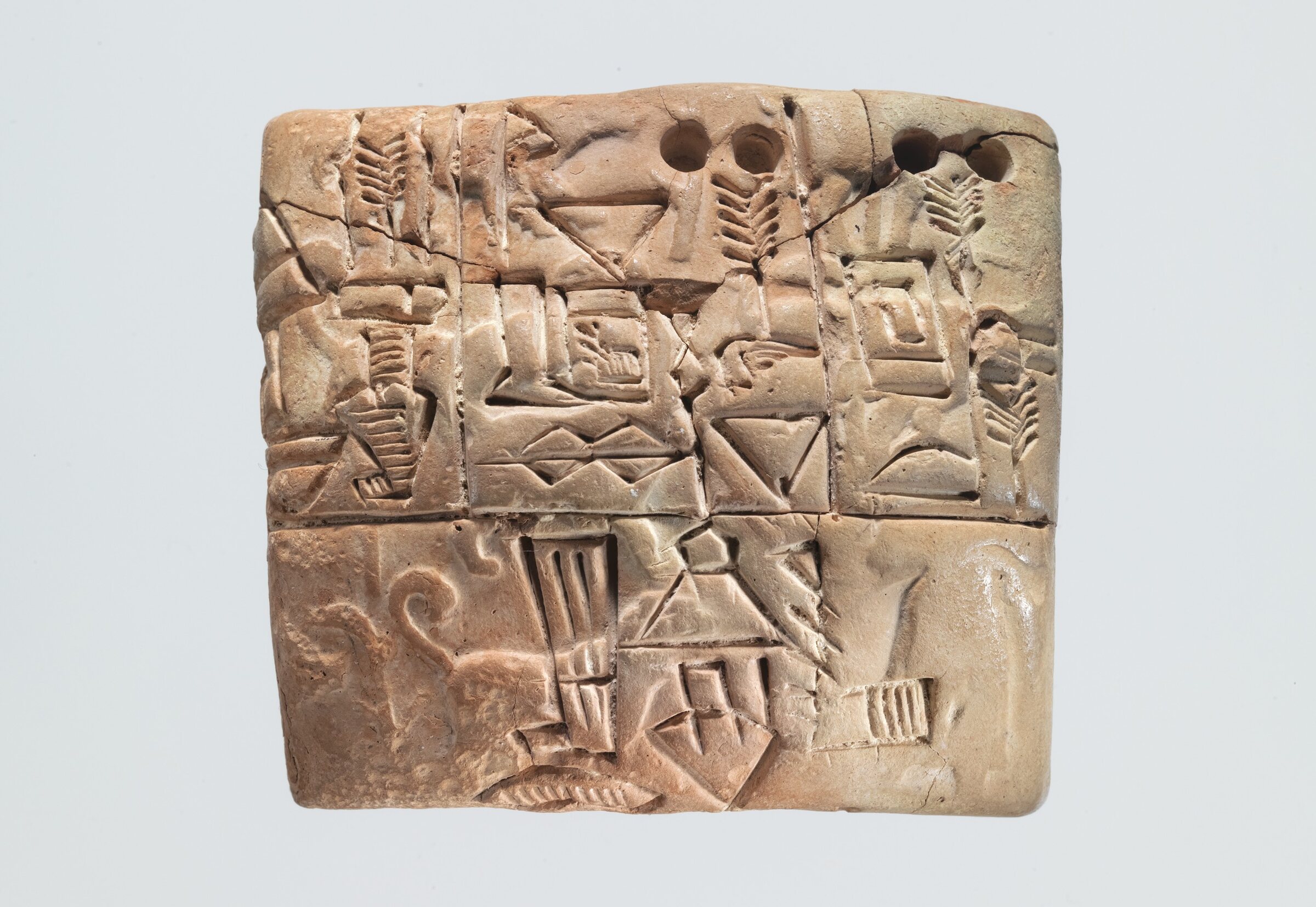
Proto-cuneiform tablet: an account of barley, probably from Uruk, c. 3100–2900 BCE. The Metropolitan Museum of Art, New York, 1988.433.1. Public domain (CC0).
Uruk’s temple offices recorded grain, animals and labour on clay tablets like this one – among the earliest known writing, from about 3200–3000 BCE.
The vase shows such goods carried in procession.
Who carved it, who carried it and why it was buried are not recorded. Even the woman at the top is debated: goddess or priestess.
Following one object’s path – from the day it is made, then from keeper to keeper, across time –
until it is lost, destroyed, or reaches the place where it is today – is the work of provenance research.
Empires between the rivers
Mesopotamia, Greek for ‘between the rivers’, is the land of the Tigris and Euphrates, most of it in today’s Iraq. Its long history forms a dense web of ties between objects, people, places and moments in time.
Farming villages appeared here around 7000 BCE. Cities, writing and empires followed, one after another.
Around 2300 BCE, Sargon of Akkad united Sumer and Akkad, and made his daughter Enheduanna high priestess of the moon god at Ur. Hymns credited to her make her the earliest author known by name, though scholars debate how much is hers.
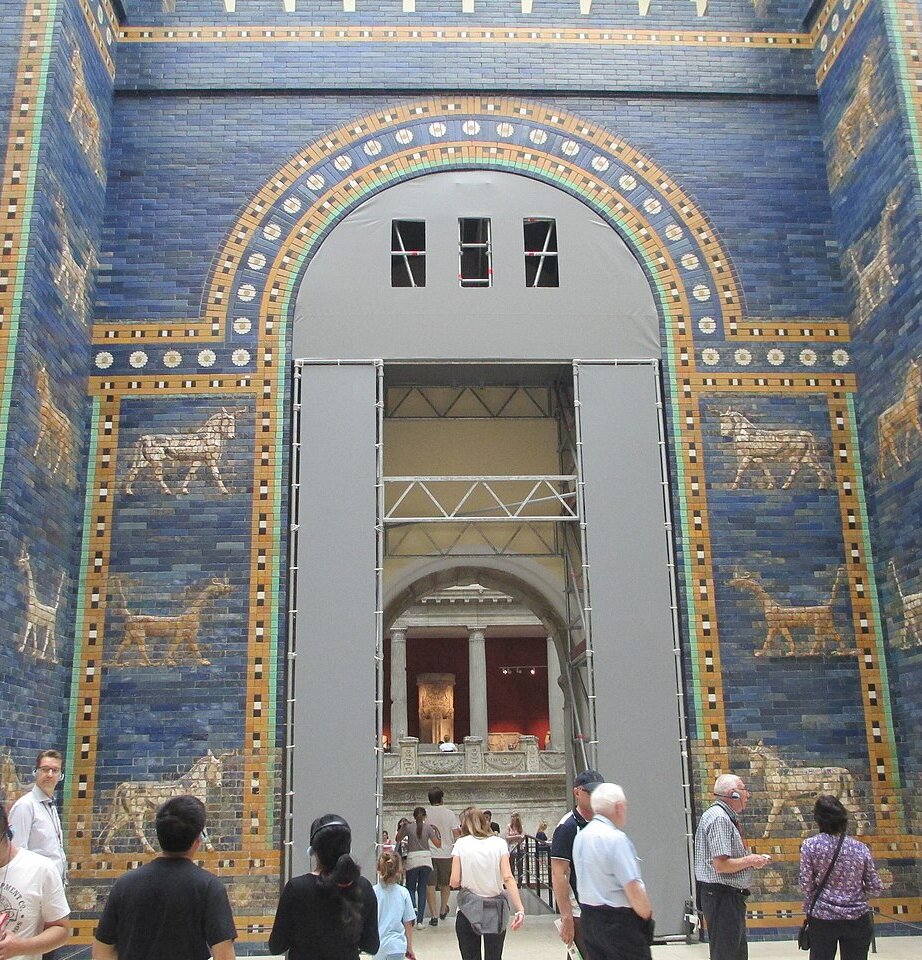
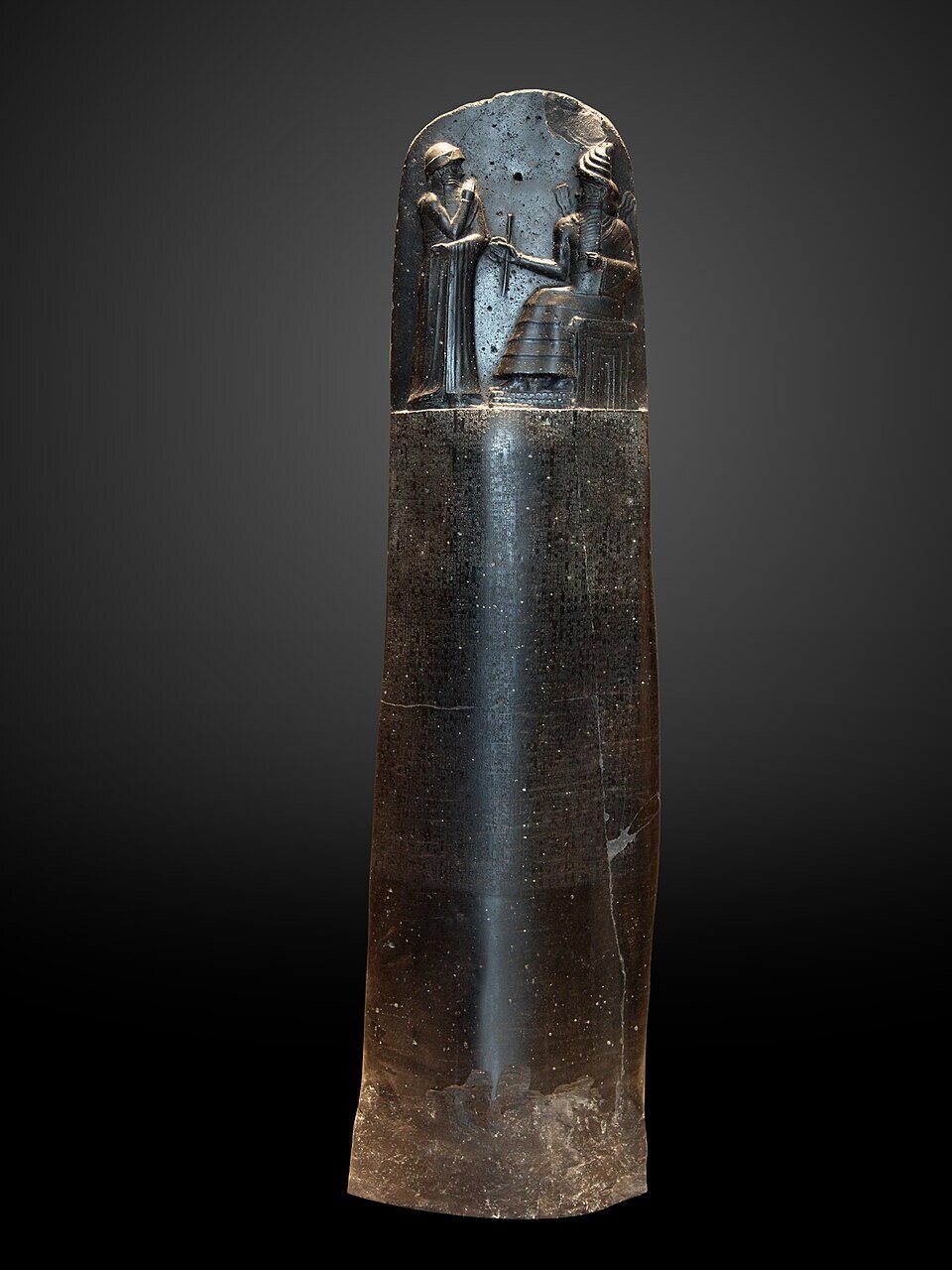
Babylon rose under Hammurabi (r. c. 1792–1750 BCE), who had his laws carved on a basalt stele. After Nineveh fell in 612 BCE, Nebuchadnezzar II rebuilt the city and its blue-glazed Ishtar Gate.
Both left Babylon: an Elamite king carried the stele to Susa in the 12th century BCE, and it is now in the Louvre. The gate’s bricks went to Berlin, where it was rebuilt in 1930.
After Persian, Greek, Parthian and Sasanian rule, Arab Muslim armies took Ctesiphon in 637 CE.
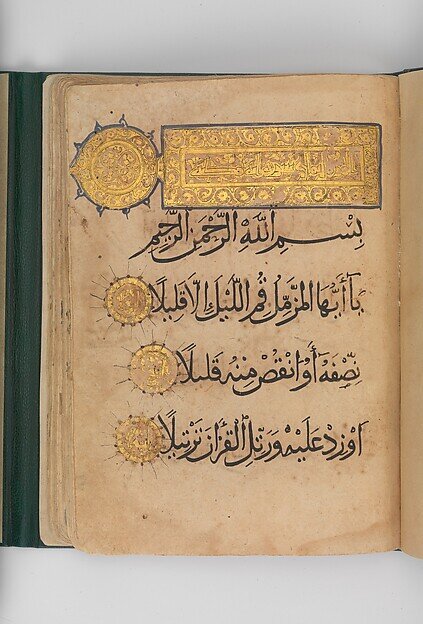
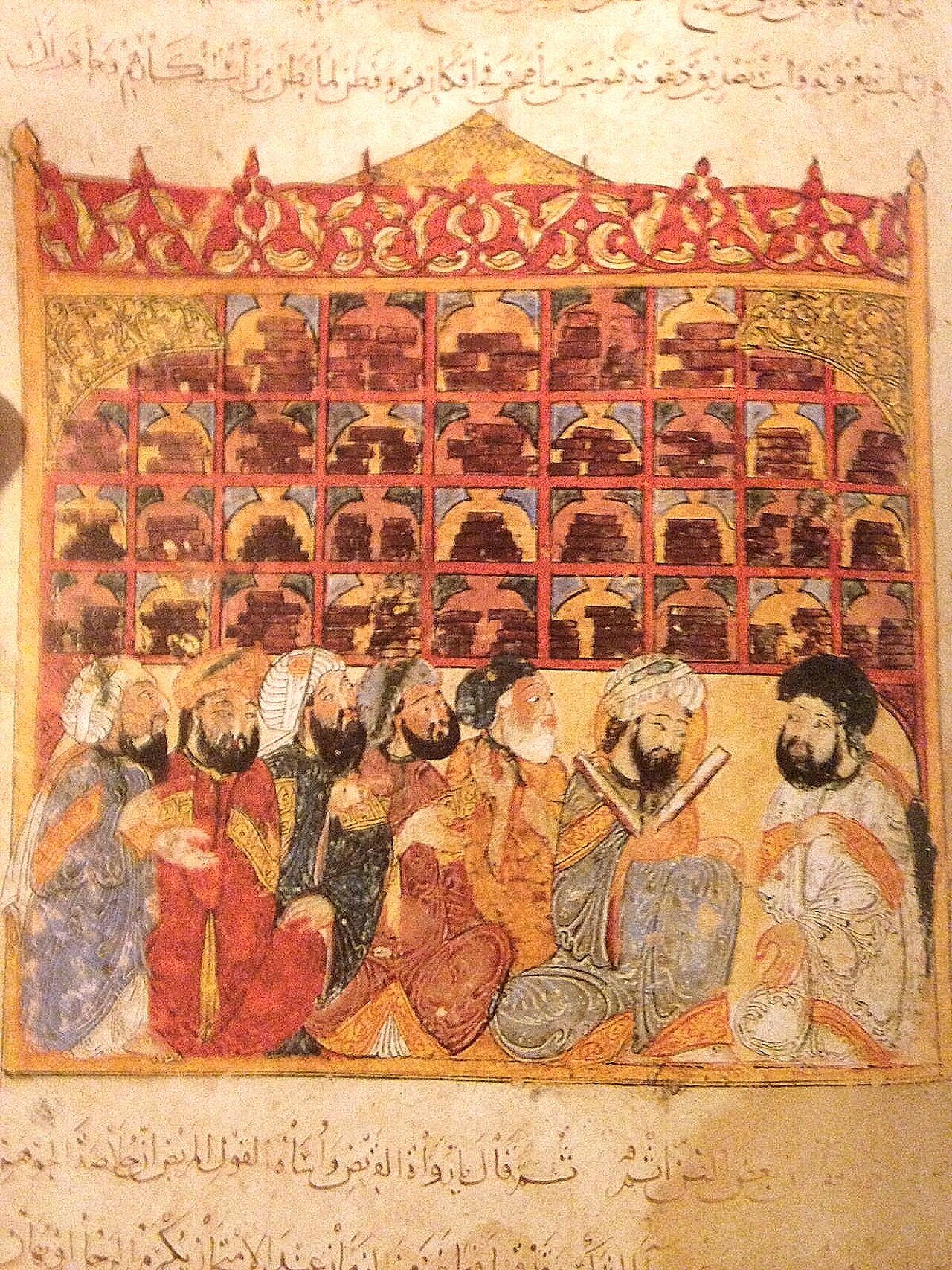
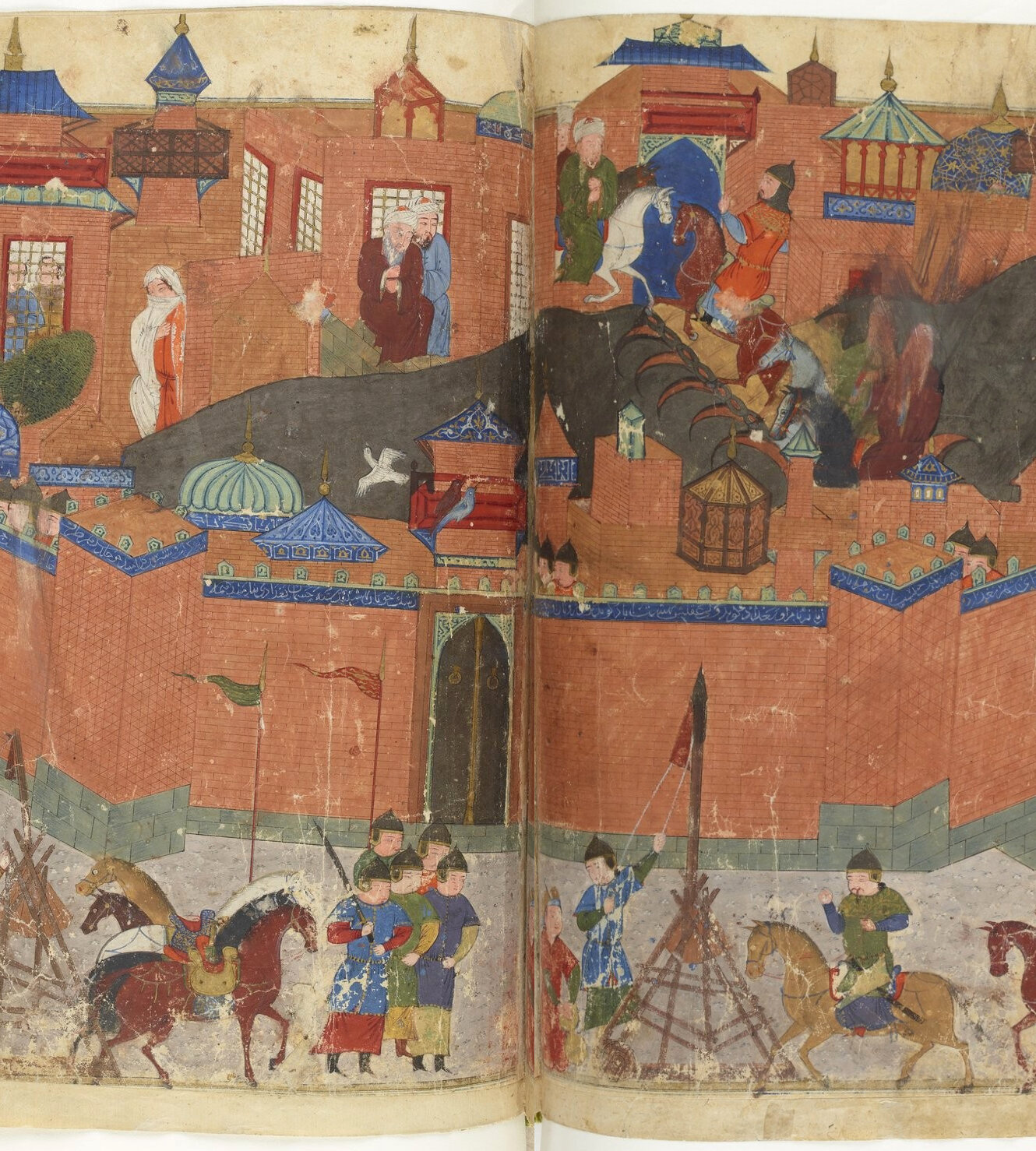
In 762, the Abbasid caliph al-Mansur founded Baghdad, within a century probably among the largest cities in the world. Scholars there translated Greek, Persian and Sanskrit works into Arabic; al-Khwarizmi’s book on al-jabr gave algebra its name. In 1258, a Mongol army under Hülegü took the city and killed the last caliph there, al-Musta‘sim.
In March 1917, during the First World War, British forces took Baghdad from the Ottomans.
Iraq became a British Mandate. In 1921 Faisal I was crowned king; in 1932 the kingdom joined the League of Nations as an independent state, and the revolution of 14 July 1958 made Iraq a republic.
Scattered and recovered
From the 1840s, European expeditions dug into the great mounds of Mesopotamia, then part of the Ottoman Empire, and shipped many finds abroad.
Iraq’s 1924 antiquities law, drafted by Gertrude Bell, still let excavators take a share of what they found.
A handful of excavators appear again and again in the story of these collections, Iraqi archaeologists among them.
Their finds became history as scholars learned to read cuneiform. In 1857, four of them translated the same Assyrian inscription independently, and their versions broadly agreed.
Today, objects from Mesopotamia are kept in museums in Iraq and around the world.
Reliefs from a single Assyrian palace, at Nimrud, are held by more than 80 collections.
In April 2003, as Baghdad fell, about 15,000 objects were stolen from the Iraq Museum.
In 2015, Islamic State militants smashed sculptures in the Mosul Museum and wrecked the ancient cities of Nimrud and Hatra.
Recovery goes on: the Iraq Museum reopened in 2015, Babylon became a World Heritage Site in 2019, and some 17,000 looted objects came home in 2021.
Some museums that keep Mesopotamia’s past
- Iraq Museum, Baghdad, Iraq
- Mosul Museum, Mosul, Iraq
- Sulaymaniyah Museum, Sulaymaniyah, Iraq
- Basrah Museum, Basra, Iraq
- British Museum, London, UK
- Musée du Louvre, Paris, France
- Pergamonmuseum, Berlin, Germany
- Penn Museum, Philadelphia, USA
- Metropolitan Museum, New York, USA
- ISAC Museum, Chicago, USA
Each object that is found, recorded or returned adds a line to the long story of the land between the rivers.